
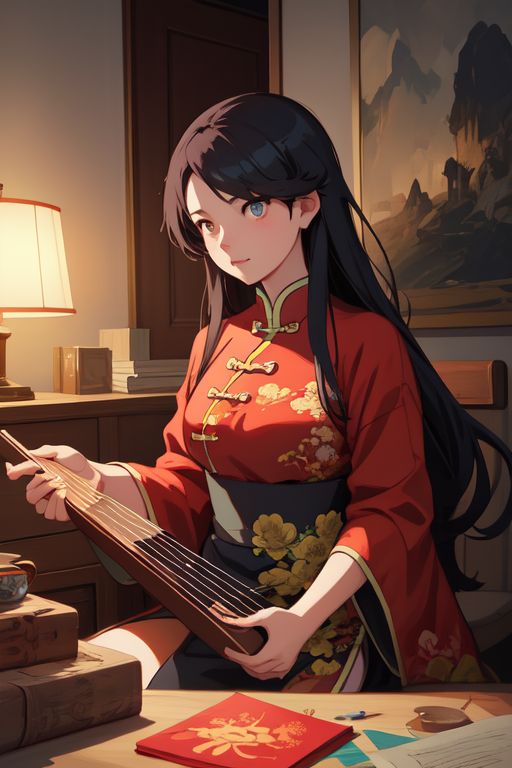
Key Elements of Chinese Music
- Instruments: Traditional Chinese music features a wide array of instruments, each with its unique sound and playing technique. Some prominent instruments include:
- Guzheng: A plucked zither with 21 strings.
- Erhu: A two-stringed bowed instrument, often described as a “Chinese violin.”
- Pipa: A four-stringed lute with a pear-shaped body.
- Dizi: A bamboo flute with a distinctive, bright sound.
- Sheng: A mouth-blown free reed instrument consisting of vertical pipes.
- Yangqin: A hammered dulcimer played with lightweight bamboo mallets.
- Scales and Tuning: Chinese music typically uses a pentatonic scale, consisting of five notes per octave. This scale creates a different tonal quality compared to the seven-note diatonic scale commonly used in Western music.
- Styles and Genres: Chinese music can be broadly categorized into several styles and genres:
- Classical and Traditional: Includes ancient court music, folk music, and religious music.
- Opera: Chinese opera, such as Peking Opera (京剧), combines music, vocal performance, mime, dance, and acrobatics.
- Modern and Pop: Contemporary genres blend traditional elements with modern influences, resulting in genres like Chinese pop (C-pop).
In recent years, Chinese music has gained international recognition. Collaborations between Chinese and Western musicians, as well as the global popularity of Chinese films and television, have introduced traditional Chinese music to a broader audience.
One of the best I recommended, “Laughter from the Vast Sea“. You can enjoy at anytime.
Source: 粗茶淡饭Chinese cuisine
Have a Happy Nice Day.
 Ignite and Achieve