
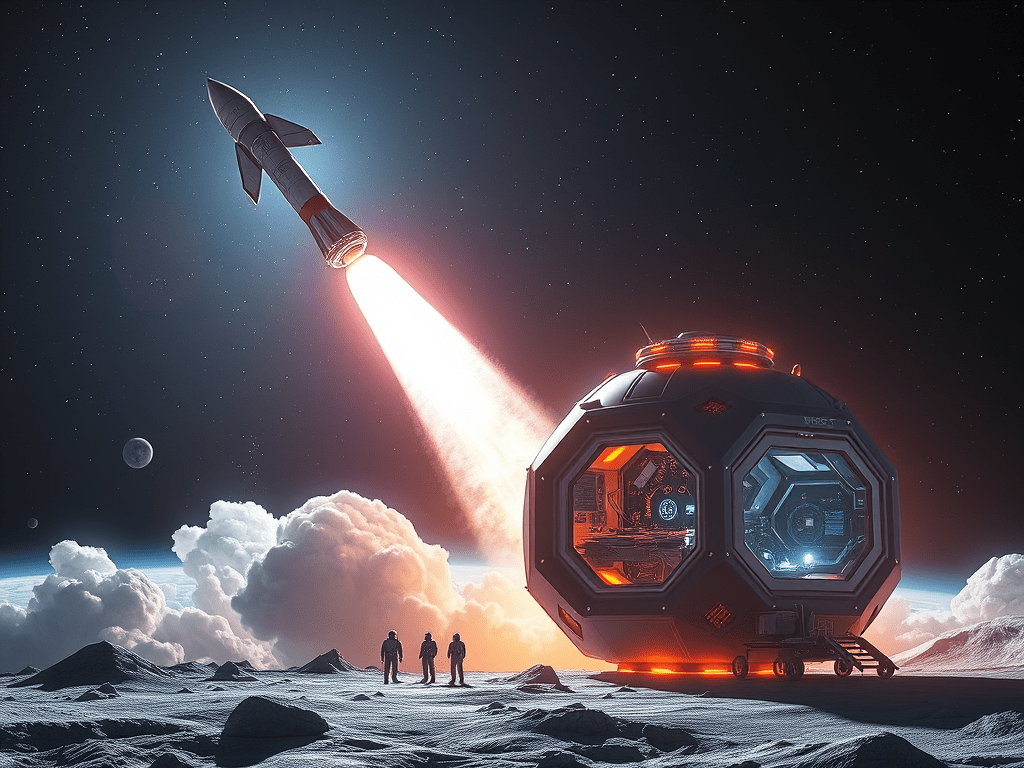
Breakthroughs in Space Technology
- Reusable Rockets: Companies like SpaceX have developed rockets that can be reused, drastically reducing the cost of space travel, which allows for more missions and experiments to be conducted in space, fostering innovation and expanding our understanding of the universe. These advancements not only pave the way for commercial space travel but also contribute to the potential for interplanetary exploration in the future.
- CubeSats and Small Satellites: These miniaturized satellites, which are typically no larger than a shoebox, allow for affordable and accessible space research and observations, thus enabling universities, research institutions, and even small companies to participate in space exploration and gather valuable data that can lead to significant advancements in various fields.
- Space Habitats: Advanced space habitats are being developed for long-duration missions and potential colonization, incorporating cutting-edge technology and sustainable living practices to support human life in the harsh conditions of space, ensuring the health and well-being of future astronauts while also addressing the challenges posed by radiation, zero gravity, and resource management.
- Propulsion Technologies: Innovations like ion thrusters and nuclear propulsion enable faster and more efficient space travel, significantly reducing transit times between planets and enhancing the feasibility of long-duration missions. By harnessing these advanced technologies, spacecraft can achieve higher speeds and sustain prolonged voyages, thereby opening new frontiers in exploration and potential colonization of other celestial bodies.
- In-Situ Resource Utilization (ISRU): Utilizing resources found on other planets or moons to support missions, significantly reducing dependency on Earth supplies while enhancing the sustainability of long-duration space exploration endeavors and enabling more ambitious human colonization efforts in the future.
- 3D Printing in Space: 3D printing technology is utilized extensively to create various tools, essential parts, and even habitats directly in the unique environment of space, allowing for enhanced efficiency and reduced reliance on Earth shipments.
- Satellite Mega-Constellations: Large networks of small satellites provide global internet coverage and enhanced communication, enabling connectivity even in the most remote areas of the world, revolutionizing industries such as telecommunications, agriculture, and disaster response while also offering potential for improved environmental monitoring and research initiatives.
- Advanced Space Suits: Next-generation space suits offer better mobility, protection, and life support for astronauts, ensuring they can perform complex missions effectively while maintaining their health and safety in the harsh environment of space.
- Space Debris Management: Advanced technologies are being actively developed to efficiently remove or effectively mitigate space debris, ensuring safer and more reliable orbital environments for both manned and unmanned spacecraft, which is critical for the sustainability of future space exploration and satellite operations.
- Autonomous Spacecraft Navigation: AI and machine learning enable spacecraft to navigate and make decisions independently, thereby significantly enhancing mission efficiency, reducing the need for continuous human oversight, and allowing for real-time adaptations to unforeseen challenges in their operational environment.
These innovations are paving the way for more ambitious and successful space missions, contributing to humanity’s future as a multi-planetary species. As technology continues to evolve at an unprecedented pace, we find ourselves equipped with advanced spacecraft, more efficient propulsion systems, and innovative life-support solutions. This progress not only enhances our exploratory capabilities but also fosters international collaboration, as nations unite to tackle the formidable challenges of space travel together. With each new discovery, we inch closer to establishing habitable environments on Mars and beyond, ultimately solidifying our place among the stars.🚀🌌🔭
 Ignite and Achieve