
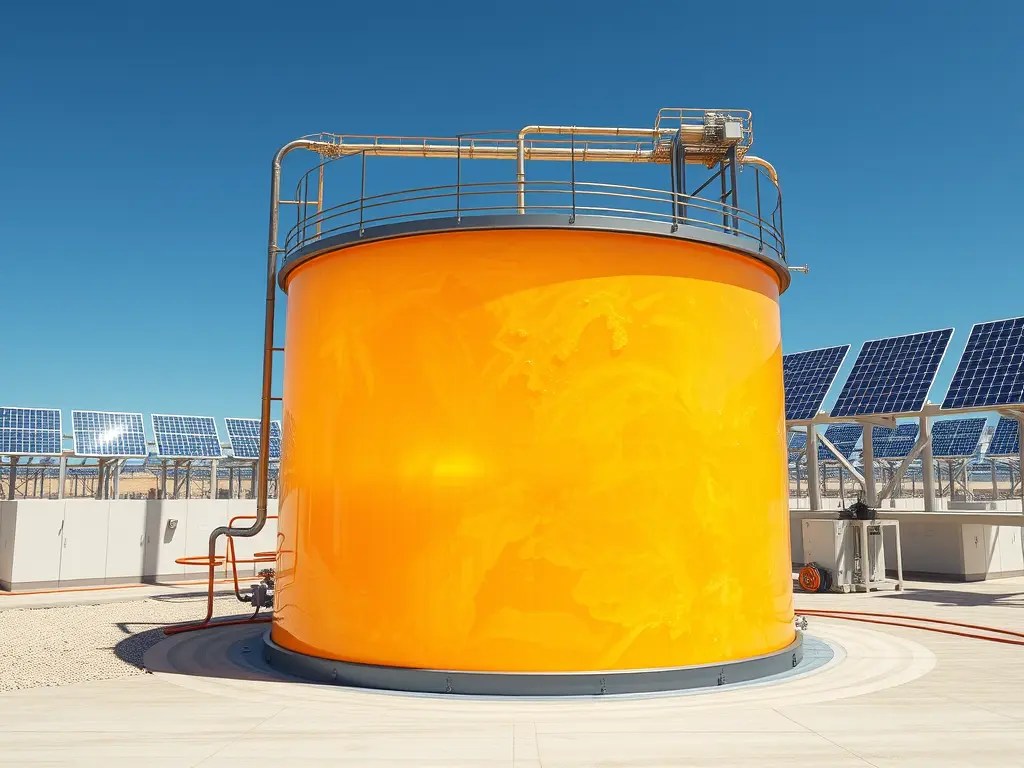
Molten salt energy storage is revolutionizing renewable energy systems by addressing one of the biggest challenges—efficient and reliable energy storage. As the world transitions to sustainable energy, this cutting-edge technology ensures consistent power supply, even when solar or wind energy generation fluctuates. With its high efficiency, cost-effectiveness, and scalability, molten salt energy storage is shaping the future of green energy solutions.
In this article, we’ll explore the groundbreaking innovations in molten salt energy storage, its real-world applications, and how it’s driving global sustainability goals. Whether you’re an energy enthusiast, an investor, or a researcher, this is your guide to understanding why molten salt energy storage is at the forefront of renewable energy advancements.
Revolutionizing Renewable Energy for a Sustainable Future
Molten Salt Energy Storage (MSES) is an innovative and efficient way to store thermal energy, particularly useful for renewable energy systems like solar and wind. Here’s a deeper dive into how it works and its benefits:
How It Works (MSES)
- Heating the Salt: Renewable energy sources, such as solar or wind, are used to heat a mixture of salts (often a combination of sodium nitrate and potassium nitrate) to a molten state, reaching temperatures as high as 565°C.
- Storage: The molten salt is stored in insulated tanks, which can retain the heat for extended periods with minimal energy loss.
- Energy Conversion: When energy is needed, the stored heat is used to produce steam, which drives a turbine to generate electricity.
Advantages (MSES)
- High Efficiency: MSES systems can achieve high thermal efficiency, reducing energy loss during storage and retrieval.
- Long Duration: The stored energy can be retained for days, making it ideal for balancing fluctuations in renewable energy supply.
- Cost-Effective: Over time, the operational costs are low due to the durability and scalability of the system.
- Sustainability: By enabling the storage of renewable energy, MSES reduces reliance on fossil fuels and promotes a greener energy grid.
Applications (MSES)
- Solar Power Plants: MSES is commonly used in Concentrated Solar Power (CSP) plants to store excess energy generated during the day for use at night.
- Grid Stability: It helps stabilize the energy grid by providing a reliable backup during peak demand or when renewable sources are unavailable.
Here are two vivid examples of Molten Salt Energy Storage (MSES) in action:
- Crescent Dunes Solar Energy Project (Nevada, USA):
- This concentrated solar power (CSP) plant uses over 10,000 mirrors (heliostats) to focus sunlight onto a central receiver tower.
- The molten salt in the tower absorbs and stores the concentrated solar energy as heat. This stored energy is then used to generate electricity, even during nighttime or cloudy conditions.
- The plant has a storage capacity of 1.1 gigawatt-hours, enabling it to provide consistent power output and improve grid reliability.
- Andasol Solar Power Station (Spain):
- Located in southern Spain, this is one of the largest CSP plants in Europe.
- It uses molten salt to store excess heat generated by solar panels during the day. This stored heat is later converted into electricity during the night or when sunlight is insufficient.
- The plant’s thermal storage system allows it to operate for up to 7.5 hours without direct sunlight, ensuring a steady energy supply.
These projects showcase the potential of MSES to revolutionize renewable energy by addressing the intermittency of solar power.
The future of Molten Salt Energy Storage (MSES) looks promising, with several advancements and applications on the horizon:
- Integration with Renewable Energy: As renewable energy sources like solar and wind become more prevalent, MSES systems are expected to play a crucial role in stabilizing energy grids by storing excess energy and releasing it during peak demand.
- Hybrid Systems: Researchers are exploring hybrid systems that combine MSES with other energy storage technologies, such as batteries, to enhance efficiency and flexibility.
- Advanced Materials: Development of new salt mixtures with higher thermal stability and lower melting points could improve the efficiency and reduce the costs of MSES systems.
- Decentralized Energy Storage: Smaller-scale MSES units could be deployed in remote or off-grid areas, providing reliable energy storage solutions for communities without access to traditional power grids.
- Industrial Applications: Beyond electricity generation, MSES could be used to provide high-temperature heat for industrial processes, such as hydrogen production and metal refining.
- Nuclear Integration: Molten salt is also being explored as a coolant and fuel in next-generation nuclear reactors, which could complement its use in energy storage.
These developments highlight the versatility and potential of MSES to transform energy storage and contribute to a sustainable energy future.
As the demand for sustainable energy solutions continues to grow, molten salt energy storage stands out as a pioneering technology with immense potential. Its ability to store renewable energy efficiently and cost-effectively positions it as a cornerstone in the transition toward a greener future. By enabling consistent power supply and supporting grid stability, this technology addresses the challenges of renewable energy intermittency.
To stay ahead in the evolving energy landscape, it’s essential to embrace innovative solutions like molten salt energy storage. Whether you’re exploring opportunities in renewable energy investments or researching cutting-edge advancements, this technology promises to play a vital role in shaping the global energy ecosystem.
Let’s work together to harness the power of molten salt energy storage and drive the shift toward a sustainable, resilient future. For more insights and updates on renewable energy innovations, stay connected and explore the possibilities ahead.
 Ignite and Achieve