
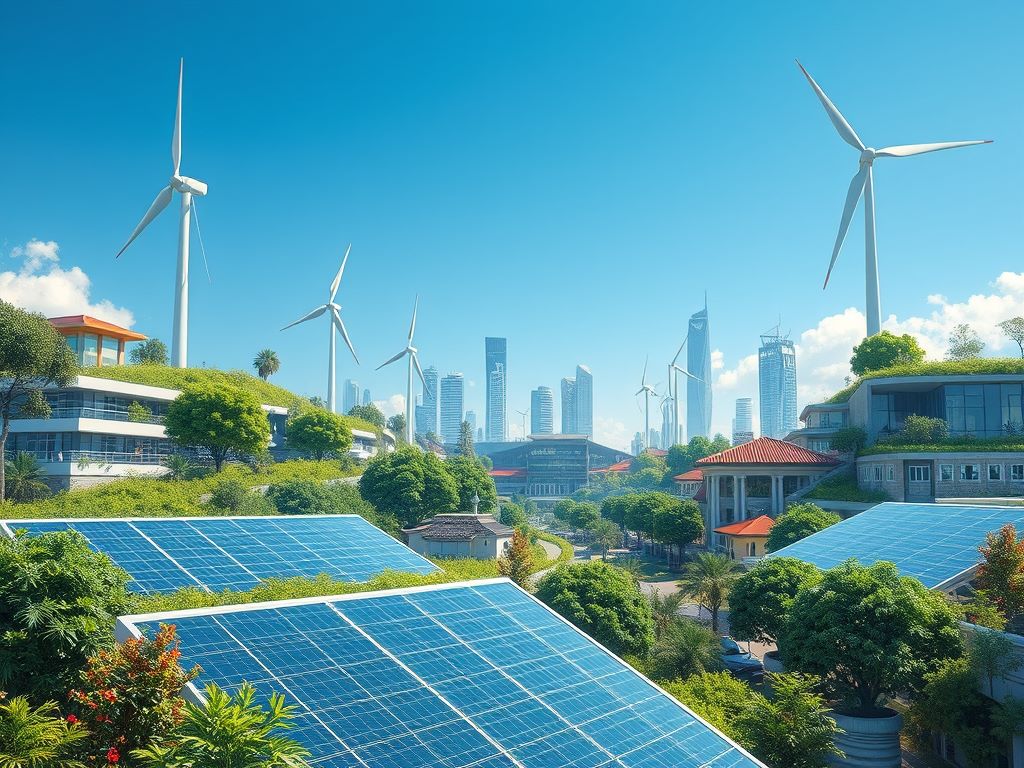
Green innovations represent the intersection of human ingenuity and environmental responsibility, offering transformative solutions to some of the greatest challenges facing our planet today. From harnessing renewable energy sources to designing sustainable urban spaces, these advancements are reshaping the way we live, work, and interact with the world. By embracing green innovations, we have the opportunity to reduce our ecological footprint, enhance resource efficiency, and create a healthier, more sustainable future. Whether it’s through cutting-edge technology, mindful agriculture, or eco-friendly everyday choices, the path to a greener tomorrow starts with the bold ideas of today.
Green Innovations Quiz: Understanding Sustainability and Eco-Friendly Practices
Quiz Rules
- Each question is worth 1 point.
- Score yourself as you go or tally your points at the end.
- Use the comments on the score range provided below to evaluate your understanding of green innovations.
Green Innovations Quiz
Section 1: Energy Innovations
- What is the primary environmental benefit of switching to solar power? a) Reduces air pollution b) Increases fossil fuel use c) Increases water consumption
- Which of the following is NOT a renewable energy source? a) Wind power b) Nuclear power c) Hydroelectric power
- What does “net-zero emissions” mean? a) Completely eliminating emissions b) Balancing emitted greenhouse gases with removal methods c) Allowing unlimited emissions
- What technology uses mirrors or lenses to concentrate sunlight for energy generation? a) Photovoltaic cells b) Concentrated solar power (CSP) c) Wind turbines
- What is the purpose of a smart grid in green energy systems? a) Efficient energy distribution b) Faster internet connections c) Traditional energy storage
Section 2: Sustainable Agriculture
- What is vertical farming? a) Growing plants in open fields b) Growing crops in stacked layers indoors c) Using only traditional farming techniques
- Which farming method helps improve soil health and sequester carbon? a) Monocropping b) Regenerative agriculture c) Slash-and-burn farming
- What is aquaponics? a) A system combining fish farming with soil-based agriculture b) A plant-only greenhouse technique c) A way to grow algae for fuel
- Which innovation reduces pesticide use while protecting crops? a) Genetic engineering b) Drone crop monitoring c) Artificial irrigation
- How does no-till farming benefit the environment? a) Prevents soil erosion and improves carbon storage b) Increases soil compaction c) Eliminates fertilizer use
Section 3: Green Building and Urban Design
- What is a green roof? a) A roof painted green b) A roof covered with vegetation c) A roof made from recycled materials
- Which building material has the lowest carbon footprint? a) Concrete b) Bamboo c) Steel
- What is the primary function of passive solar design? a) Cooling buildings using external energy b) Maximizing natural sunlight for heating and lighting c) Replacing windows with solar panels
- LEED certification stands for: a) Legal Energy Efficiency Development b) Leadership in Energy and Environmental Design c) Low Environmental Emission Development
- Which innovation helps cities manage stormwater and reduce flooding? a) Permeable pavements b) Conventional asphalt roads c) Underground reservoirs
Section 4: Transportation and Mobility
- What is the main advantage of electric vehicles (EVs)? a) No maintenance required b) Reduced greenhouse gas emissions compared to gas-powered cars c) Unlimited driving range
- What is “bike-sharing”? a) Renting bicycles for short-term use to reduce carbon footprints b) Sharing bicycles only with friends c) Selling used bicycles for profit
- Hydrogen fuel cell vehicles emit: a) Water vapor b) Carbon dioxide c) Nitrogen oxides
- What does “last-mile delivery” refer to in green logistics? a) Transitioning deliveries to eco-friendly modes like bikes or drones b) Deliveries that require fossil fuels c) International shipping practices
- Which innovation reduces urban traffic congestion while cutting emissions? a) Elevated highways b) Smart public transportation systems c) Expanding parking lots
Section 5: Waste Management and Circular Economy
- What does “upcycling” mean? a) Converting waste materials into higher-value products b) Recycling waste into the same material c) Burning waste for energy
- What is a major benefit of bioplastics? a) They are entirely biodegradable b) They require less energy to produce than traditional plastics c) They create more greenhouse gases
- What is “zero waste”? a) Sending most waste to landfills b) Minimizing waste production and reusing resources c) Only recycling plastics
- Which method can effectively reduce food waste? a) Composting food scraps b) Storing food in plastic bags c) Throwing away leftovers
- What is e-waste? a) Waste from electric vehicles b) Discarded electronic devices and components c) Leftover renewable energy
Section 6: Green Innovations in Daily Life
- What is a “carbon footprint”? a) The total greenhouse gases produced by an individual or activity b) The number of trees a person plants each year c) Footprints left on soil
- How do LED lights contribute to green innovation? a) Consume less energy and last longer than traditional bulbs b) Provide brighter light with higher energy consumption c) Are made from renewable resources
- Which device helps households track and reduce energy usage? a) A smart meter b) A circuit breaker c) A power strip
- What does “greywater recycling” mean? a) Reusing lightly used water for irrigation or flushing b) Storing rainwater underground c) Filtering river water for drinking
- What is the goal of sustainable fashion? a) To create affordable disposable clothing b) To use eco-friendly materials and minimize waste in production c) To produce fashionable items regardless of waste
Green Innovations Quiz: Correct Answers and Scoring Guide
Section 1: Energy Innovations
- Correct Answer: a) Reduces air pollution
- Correct Answer: b) Nuclear power
- Correct Answer: b) Balancing emitted greenhouse gases with removal methods
- Correct Answer: b) Concentrated solar power (CSP)
- Correct Answer: a) Efficient energy distribution
Section 2: Sustainable Agriculture
- Correct Answer: b) Growing crops in stacked layers indoors
- Correct Answer: b) Regenerative agriculture
- Correct Answer: c) A system combining fish farming with hydroponics
- Correct Answer: b) Drone crop monitoring
- Correct Answer: a) Prevents soil erosion and improves carbon storage
Section 3: Green Building and Urban Design
- Correct Answer: b) A roof covered with vegetation
- Correct Answer: b) Bamboo
- Correct Answer: b) Maximizing natural sunlight for heating and lighting
- Correct Answer: b) Leadership in Energy and Environmental Design
- Correct Answer: a) Permeable pavements
Section 4: Transportation and Mobility
- Correct Answer: b) Reduced greenhouse gas emissions compared to gas-powered cars
- Correct Answer: a) Renting bicycles for short-term use to reduce carbon footprints
- Correct Answer: a) Water vapor
- Correct Answer: a) Transitioning deliveries to eco-friendly modes like bikes or drones
- Correct Answer: b) Smart public transportation systems
Section 5: Waste Management and Circular Economy
- Correct Answer: a) Converting waste materials into higher-value products
- Correct Answer: b) They require less energy to produce than traditional plastics
- Correct Answer: b) Minimizing waste production and reusing resources
- Correct Answer: a) Composting food scraps
- Correct Answer: b) Discarded electronic devices and components
Section 6: Green Innovations in Daily Life
- Correct Answer: a) The total greenhouse gases produced by an individual or activity
- Correct Answer: a) Consume less energy and last longer than traditional bulbs
- Correct Answer: a) A smart meter
- Correct Answer: a) Reusing lightly used water for irrigation or flushing
- Correct Answer: b) To use eco-friendly materials and minimize waste in production
Scoring and Comments
- 26–30 points: Green Visionary You possess a deep and comprehensive understanding of green innovations, making you a true advocate for sustainability. Keep inspiring others with your knowledge!
- 21–25 points: Eco Advocate You have a solid grasp of green innovations, but there’s room to explore more specific aspects. Continue expanding your expertise in sustainability.
- 15–20 points: Sustainability Explorer You have a foundational understanding of green practices, and you’re on your way to becoming well-versed in sustainability topics. Keep learning and exploring!
- 10–14 points: Eco Learner You’re beginning to build your knowledge of green innovations. Dive deeper into specific areas, and you’ll develop a broader perspective in no time.
- 0–9 points: Environmental Newbie You’re at the starting point of your sustainability journey. Begin exploring the basics of green innovations, and you’ll quickly grow your understanding of eco-friendly practices.
Green innovations embody the transformative power of human creativity aligned with environmental responsibility.
They provide solutions to pressing global challenges, such as climate change, resource depletion, and pollution.
By embracing renewable energy, sustainable agriculture, and eco-friendly urban design, we can reduce our ecological footprint and create a sustainable future.
Green innovations also extend into our daily lives, influencing how we travel, consume, and manage waste.
They not only benefit the environment but also improve quality of life, from better health to enhanced energy efficiency.
Adopting green practices collectively ensures a cleaner, healthier planet for generations to come.
The journey toward sustainability starts with curiosity, education, and conscious actions. Let us all contribute to building a greener tomorrow.
 Ignite and Achieve