
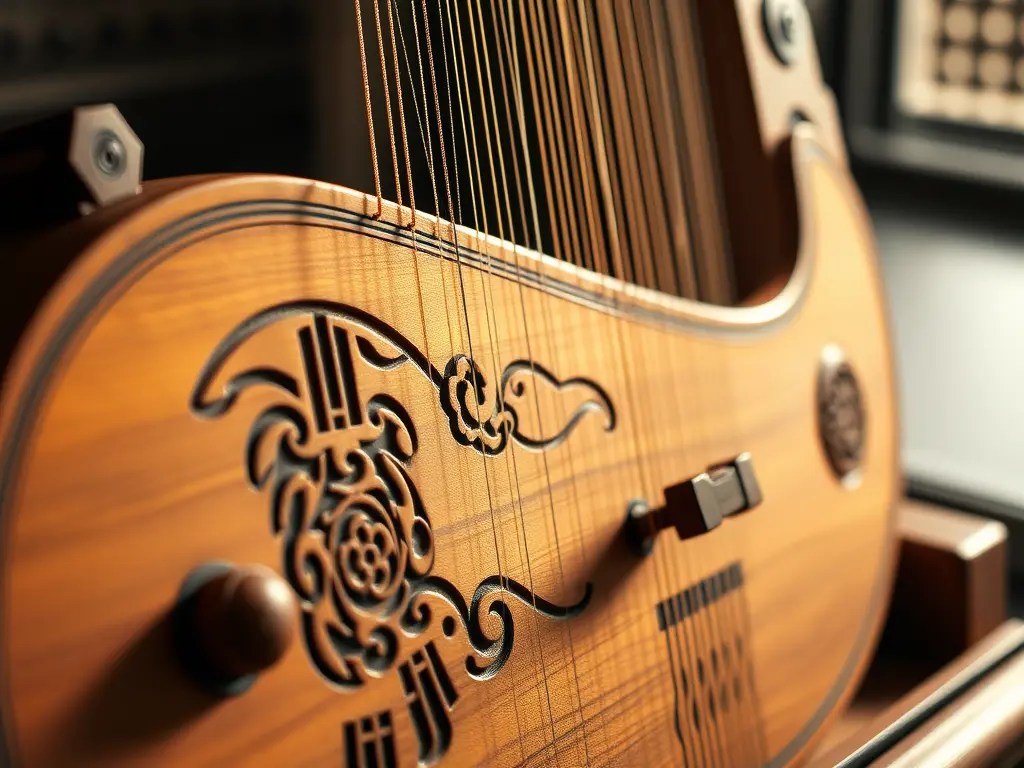
The guzheng is a traditional Chinese plucked string instrument with a captivating history and design. Here’s a detailed look at this remarkable instrument:
History
The guzheng traces its origins back over 2,500 years to the Warring States period of ancient China. It is believed to have evolved from an even older instrument known as the se. Over centuries, it became a staple of Chinese music and culture, admired for its lyrical, expressive sound. The guzheng has been influenced by various dynasties, and its design and musical style evolved alongside advancements in craftsmanship and cultural exchanges. Today, it holds a prominent place in both classical and contemporary Chinese music.
Structure
The guzheng is a type of zither, characterized by:
- Body: Its wooden body is long and curved, often constructed from materials like rosewood or sandalwood to enhance resonance.
- Strings: Modern guzhengs typically have 21 strings, though variations with more or fewer strings exist. The strings are made from steel or nylon wound with silk for a rich and dynamic tonal range.
- Bridges: Movable bridges made from hardwood allow players to fine-tune the pitch of each string.
- Decorative Elements: Many guzhengs are adorned with intricate designs, showcasing traditional Chinese motifs like landscapes, flowers, or calligraphy.
Playing Technique
The guzheng is played by plucking the strings using finger picks attached to the fingers. Its sound is often compared to running water or whispering wind. Techniques include:
- Plucking: Using one or more fingers to produce clear, crisp notes.
- Sliding: Gliding the finger across the string to create smooth transitions.
- Vibrato: A technique where players apply pressure and gently wiggle the string to add emotion to the notes.
- Chords and Harmonics: Playing multiple strings simultaneously or producing pure, bell-like tones through special finger placements.
Musical Style
The guzheng is versatile and used for a wide range of music:
- Traditional: Often associated with regional Chinese melodies, evoking landscapes and emotions.
- Contemporary: Modern musicians incorporate the guzheng into genres like jazz, pop, and experimental music, blending its ancient sound with innovative styles.
One of the Best Performers:
Source:碰碰彭碰彭Jingxuan
Source:碰碰彭碰彭Jingxuan
Another Best Performer:
Guzheng Cover : Jiu Shi Ne Zha
Source: 玉面小嫣然
Enjoy your Musical Day.
 Ignite and Achieve