
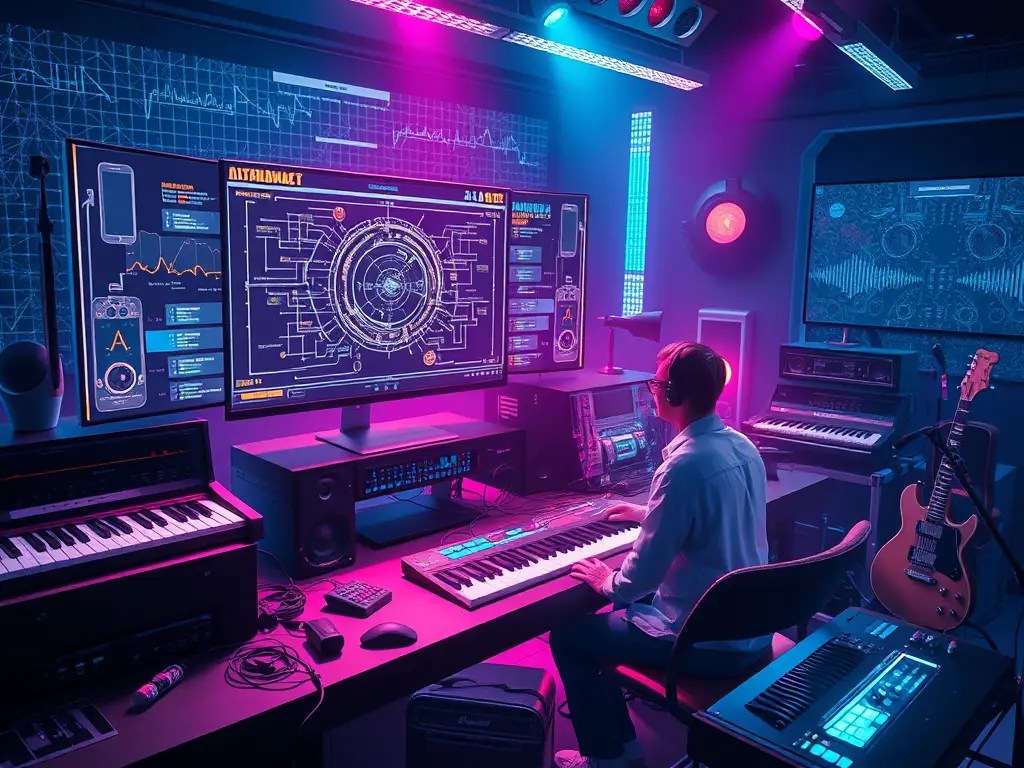
Artificial intelligence is revolutionizing the music industry—composing songs, generating instrumentals, and even mimicking human voices with stunning accuracy. As AI technologies continue to evolve, we’re witnessing not only the enhancement of musical creativity but also a transformation in how music is produced, marketed, and consumed. However, with innovation comes deep ethical questions that demand our attention: What happens to human musicians? Will they find new roles in collaborative efforts with AI, or will they struggle to compete? Who owns AI-generated music—should the credit go to the programmers behind the algorithms, the artists who inspired them, or the AI itself? Will creativity become obsolete, replaced by data-driven composition, or will it flourish in new and unexpected ways? These questions challenge us to rethink our perceptions of artistry and ownership in a rapidly changing musical landscape.
This is not just a technological shift—it’s a debate on artistic integrity, copyright, and the very essence of what makes music… human. Let’s dive deep.
1. The Rise of AI in Music Creation
How AI Composes Music
AI music-generating models analyze millions of songs, learning patterns, chord progressions, tempos, and lyrical structures to create original compositions. Popular AI music tools include:
- AI Songwriting Assistants – Help artists refine lyrics and melodies by providing suggestions for word choice, enhancing emotional depth of the music, and offering creative ideas for chord progressions to create captivating and memorable songs.
- AI Music Generators – Compose full tracks with little human input, utilizing advanced algorithms and machine learning techniques to create unique soundscapes that can vary in genre, style, and complexity, significantly enhancing the creative process for musicians and producers alike.
- Voice Cloning Models – Replicate artists’ voices for custom songs, allowing for personalized musical experiences, where fans can enjoy new tracks that sound just like their favorite performers.
Why AI Music is Growing
- Speed & Efficiency – AI can generate compositions in seconds, while human musicians take weeks to carefully craft, refine, and perfect their art, ensuring every note and rhythm aligns harmoniously with their intended emotions and messages.
- Cost-Effective – Companies use AI soundtracks instead of paying composers, which significantly reduces their overall production costs and allows for the allocation of budget towards other critical areas of their projects.
- Customization – AI allows users to create personalized songs for gaming, social media, and branding, tailoring each melody and lyric to reflect individual preferences and unique styles, ensuring that every creation resonates deeply with the intended audience while enhancing user engagement and experience.
This technological leap is exciting—but it also challenges traditional music ethics.
2. Ethical Concerns of AI-Generated Music
A. Copyright & Ownership Issues
If AI creates a song, who owns the rights?
- Does it belong to the programmer, the AI model, or the person who requested it? This raises the fundamental question of ownership and intention behind the creation of the content, which can greatly influence how it is perceived and utilized in various contexts.
- What happens when AI mimics an artist’s signature style or voice without consent? This act raises significant ethical and legal concerns, as it challenges the boundaries of originality and intellectual property. The artist’s unique expression, which includes their emotional depth and personal experiences, may be diluted or misrepresented, leading to a potential devaluation of their work. Furthermore, issues of copyright infringement come to the forefront, with debates surrounding the rights of creators versus the capabilities of technology in replicating human artistry.
Courts and copyright laws are struggling to keep up, leaving AI-generated music in a legal gray zone.
B. Loss of Human Creativity
- Will record labels replace human artists with AI-generated tracks in the near future, or will they continue to support and collaborate with traditional musicians to create a diverse range of music that resonates with listeners on a personal level?
- Could AI music reduce demand for songwriters, composers, and session musicians, potentially impacting the creative landscape of the music industry and altering how we perceive artistic value in the age of technology?
- Does AI music lack emotional depth compared to songs created by real-life experiences, or can it evoke genuine feelings and connect with listeners on a similar level?
Music has always been a personal and emotional art form—can AI ever truly replicate human expression?
C. Plagiarism & Ethical Copying
AI learns from existing songs, raising concerns about unintentional plagiarism.
- AI-generated music might accidentally mimic melodies from copyrighted songs, leading to potential legal issues and copyright infringement claims by original artists who recognize their work in the output.
- Artists fear AI could be trained to replicate their unique styles without compensation, leading to a significant devaluation of their work and the potential for exploitation in the creative industry.
This creates a dilemma: Is AI innovation stealing from human creators?
3. The Future of Musicians in an AI-Powered Industry
A. Collaboration, Not Replacement
Rather than replacing musicians, AI may become a creative tool—helping artists generate ideas, refine compositions, and enhance production quality. Successful examples:
- Artists using AI-assisted songwriting for inspiration, drawing on advanced algorithms and machine learning techniques to enhance their creative process, producing unique melodies and lyrics that push the boundaries of traditional music composition.
- AI helping producers create complex instrumentals faster, enabling them to explore innovative soundscapes and experiment with various musical elements while streamlining their creative workflow.
- Musicians blending AI elements with human emotion for unique tracks that resonate deeply with listeners and explore the intersection of technology and artistry in innovative ways.
Instead of viewing AI as competition, musicians could see it as enhancement—just like digital synthesizers revolutionized electronic music in the past.
B. Ethical AI Regulations & Copyright Protection
To protect human artists, industries may implement:
- Laws requiring transparency when using AI-generated music, ensuring that consumers are informed about the origins of the music and the role of artificial intelligence in its creation, thereby fostering trust and accountability in the industry.
- Royalty agreements for artists whose styles or voices are mimicked by AI, ensuring fair compensation for the creative contributions and protecting their intellectual property rights in an increasingly digital landscape.
- AI model restrictions to prevent unauthorized use of copyrighted material, ensuring that the intellectual property rights of creators and authors are upheld and that the AI operates within legal and ethical boundaries, thereby maintaining trust and integrity in its applications.
Governments and record labels are already discussing new copyright laws tailored to AI-created art.
C. The Human Edge: Emotion & Authenticity
No matter how advanced AI gets, it lacks human emotion—the deep personal experiences that shape music.
- AI can generate melodies using complex algorithms, but it can’t feel heartbreak or joy in the way that humans do, as it lacks genuine emotional experiences and consciousness.
- Musicians bring cultural, political, and personal narratives to their work—something AI struggles to replicate, as the genuine emotions and experiences that shape their artistry are often deeply rooted in human history and collective memory, allowing their creations to resonate on a profoundly personal level with audiences around the world.
The future of music may be a fusion—AI generating ideas, while humans infuse authenticity and meaning.
Final Thoughts
AI-generated music is here to stay, but its ethical implications are still unfolding. As technology advances, artists find themselves at a crossroads, debating whether AI will replace musicians, or if it will simply serve as a powerful tool for creativity that enhances human expression. This evolving landscape raises critical questions about originality and ownership; who truly owns a song composed with the assistance of AI? The answer lies in how artists, industry leaders, and regulators adapt to this new era of music production, striking a balance between embracing innovation and preserving the unique essence of human artistry. Furthermore, the collaboration between AI and musicians could lead to unprecedented genres and styles, enriching the musical tapestry in ways previously unimaginable. As discussions around these topics continue, it becomes imperative for the music community to engage in meaningful dialogue to navigate this transformative phase responsibly.
 Ignite and Achieve