
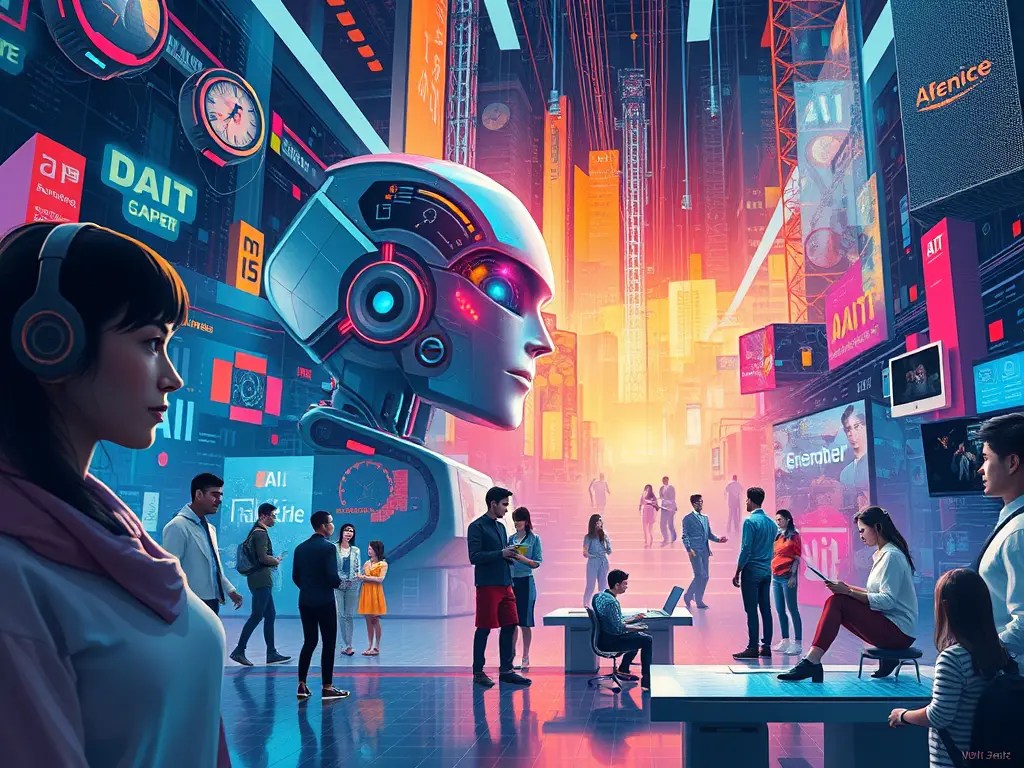
The future of AI culture in modern life is vast and multifaceted, influencing nearly every aspect of society, from how we communicate to how industries operate. Here’s a deeper dive into its potential impact: As artificial intelligence continues to evolve, it not only transforms the workforce by automating repetitive tasks but also enhances creativity in the arts, enabling new forms of expression that were previously unimaginable. Furthermore, AI systems can personalize learning experiences, tailoring educational content to individual needs, thus promoting more effective learning outcomes.
Additionally, the integration of AI into healthcare promises to revolutionize patient care by predicting health issues before they arise and providing tailored treatment plans, ultimately leading to improved public health. As we embrace these technologies, it is essential to navigate the ethical implications and ensure that AI development prioritizes inclusivity and transparency, fostering a future where technology empowers individuals and communities alike.
1. AI and Human Interaction
- AI Companions & Socialization: AI-powered virtual companions will become more sophisticated, offering emotional support, conversation, and even companionship for those who seek it.
- AI in Relationships: AI-driven matchmaking and relationship coaching could enhance human connections, helping people navigate social dynamics.
- AI and Emotional Intelligence: Future AI systems may be designed to recognize and respond to human emotions, improving interactions in customer service, healthcare, and personal assistants.
2. AI in Creativity and Entertainment
- AI-Generated Art & Music: AI will continue to push creative boundaries, generating unique artworks, music compositions, and even literature.
- AI in Gaming: AI-driven NPCs (non-playable characters) will become more lifelike, adapting to player behavior and creating dynamic storytelling experiences.
- AI in Film & Media: AI will assist in scriptwriting, video editing, and even deepfake technology, revolutionizing content creation.
3. AI in Work and Automation
- AI-Powered Workplaces: AI will automate repetitive tasks, allowing humans to focus on strategic and creative work.
- AI and Job Displacement: While AI will create new job opportunities, it will also replace certain roles, requiring workforce adaptation.
- AI in Decision-Making: Businesses will rely on AI for data-driven insights, improving efficiency and strategic planning.
4. AI and Ethics
- Bias & Fairness: AI systems must be designed to minimize bias and ensure fairness in decision-making.
- Privacy Concerns: AI’s ability to analyze vast amounts of personal data raises concerns about surveillance and data security.
- AI Governance: Governments and organizations will need to establish ethical guidelines and regulations to ensure responsible AI use.
5. AI in Everyday Life
- Smart Homes & IoT: AI-powered smart devices will optimize energy use, security, and convenience in homes.
- AI in Healthcare: AI will revolutionize diagnostics, personalized medicine, and robotic-assisted surgeries.
- AI in Education: AI-driven learning platforms will provide personalized education experiences tailored to individual needs.
6. AI and Human Identity
- AI and Consciousness: As AI systems become more advanced, philosophical questions about machine consciousness and intelligence will arise.
- AI and Creativity: The debate over whether AI can truly be creative or simply mimic human creativity will continue.
- AI and Human Augmentation: AI-powered prosthetics, brain-computer interfaces, and cognitive enhancements will blur the line between human and machine.
7. AI and Global Impact
- AI in Climate Change: AI will help predict climate patterns, optimize energy use, and develop sustainable solutions.
- AI in Governance: Governments will use AI for policy analysis, crisis management, and public services.
- AI in Space Exploration: AI will assist in autonomous space missions, planetary exploration, and extraterrestrial research.
Conclusion
The future of AI culture is not just about technology—it’s about how society adapts, regulates, and embraces AI as a fundamental part of modern life. As we stand on the brink of unprecedented advancements, it is crucial to consider the ethical implications and the responsibilities that come with such powerful tools. Communities will need to engage in open dialogues about the balance between innovation and safety, ensuring that AI benefits all individuals and not just a select few. Moreover, educational systems must evolve to prepare future generations for a landscape where AI is integrated into everyday activities, promoting a culture of collaboration between humans and machines. This means incorporating interdisciplinary approaches that merge technology with social sciences, ethics, and the arts to cultivate well-rounded thinkers who can navigate and influence the evolving technological landscape. By fostering an inclusive environment that encourages creativity and critical thinking, society can harness the full potential of AI while safeguarding human values and fostering a thriving, cooperative future. Additionally, policymakers will need to address the challenges posed by job displacement and privacy concerns, actively working to create frameworks that protect individuals and promote equitable opportunities in an AI-driven economy. Furthermore, as we embrace AI’s capabilities, we must remain vigilant against biases embedded in algorithms, striving for transparency and accountability to build trust within communities and ensure that the technological revolution uplifts everyone, creating a fair and just society.
 Ignite and Achieve