
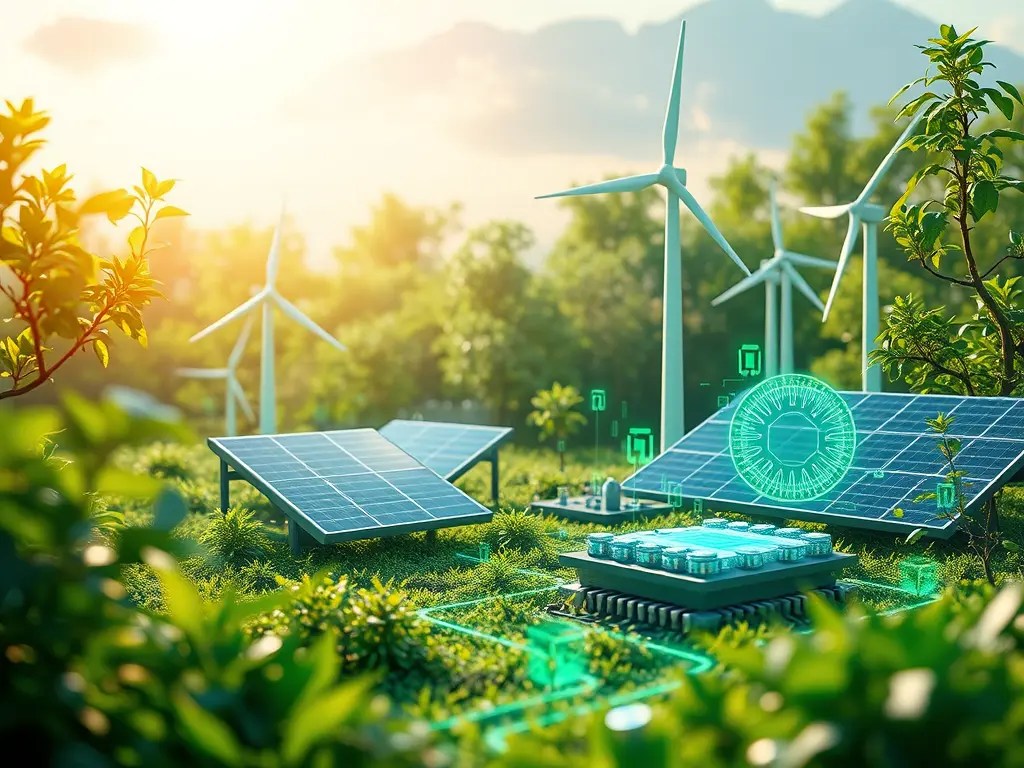
Green AI is emerging as a crucial focus in the tech industry, aiming to balance artificial intelligence advancements with sustainability. As AI models grow in complexity, their energy consumption and environmental impact have become significant concerns, prompting researchers and organizations to prioritize eco-friendly practices in AI development.
The second half of 2025 is witnessing major developments in energy-efficient AI algorithms, optimized computing infrastructure, and AI-powered sustainability solutions, which are designed to reduce carbon footprints while enhancing performance. These innovations not only help mitigate the negative effects of AI on the environment but also foster the growth of green technologies across various sectors. Furthermore, collaborations among tech giants, startups, and environmental organizations are paving the way for a more sustainable future, where AI can contribute positively to ecological conservation and resource management. Here’s a deep dive into the latest trends and innovations shaping Green AI:
1. Energy-Efficient AI Algorithms
- Low-Power AI Models: Researchers are developing AI models that require fewer computational resources, reducing electricity consumption while maintaining performance.
- Sparse Computing Techniques: AI models are being trained using sparse computing, which minimizes redundant calculations and optimizes energy use.
- Edge AI & On-Device Processing: AI is shifting toward edge computing, allowing devices to process data locally instead of relying on energy-intensive cloud servers.
2. Optimized Computing Infrastructure
- AI-Specific Chips & Processors: Companies are designing energy-efficient AI chips that consume less power while delivering high-speed computations.
- Liquid Cooling Systems for Data Centers: Advanced cooling technologies are reducing the energy required to maintain AI servers, lowering carbon footprints.
- Renewable-Powered AI Data Centers: Tech giants are investing in solar, wind, and nuclear energy to power AI infrastructure sustainably.
3. AI-Powered Sustainability Solutions
- AI for Climate Modeling: AI-driven simulations are helping scientists predict climate patterns and optimize environmental strategies.
- Smart Grid Optimization: AI is improving energy distribution by balancing supply and demand, reducing waste in electricity grids.
- AI-Enhanced Recycling & Waste Management: Machine learning is being used to sort and process recyclable materials more efficiently.
4. Addressing AI’s Carbon Footprint
- Carbon-Neutral AI Training: Companies are offsetting emissions from AI model training by investing in carbon capture and sustainable energy projects.
- AI-Induced Power Grid Strain: The growing demand for AI is stressing electricity grids, prompting discussions on balancing AI expansion with sustainability.
- Eco-Friendly AI Development Practices: Developers are adopting sustainable coding techniques to minimize energy-intensive computations.
5. Policy & Industry Initiatives
- Government Regulations on AI Energy Use: Policymakers are introducing guidelines to ensure AI development aligns with environmental goals.
- Corporate Sustainability Pledges: Major tech firms are committing to net-zero AI operations, investing in green infrastructure and energy-efficient AI models.
- AI Ethics & Environmental Responsibility: Discussions around responsible AI development are expanding to include sustainability considerations.
Conclusion
Green AI is at the forefront of technological innovation, ensuring that artificial intelligence evolves without compromising environmental sustainability. As AI continues to shape industries across the globe, the focus on energy-efficient algorithms, optimized infrastructure, and AI-driven sustainability solutions will be critical in reducing its ecological footprint. This paradigm shift not only encourages businesses to adopt greener practices but also fosters a culture of responsibility that prioritizes the planet’s health while pursuing economic growth.
The second half of 2025 is expected to bring further advancements in low-power AI models, renewable-powered data centers, and AI-driven climate solutions, paving the way for a more sustainable future. With these innovations, companies can significantly lower their carbon emissions, effectively balancing the demands of technological progress with the urgent need to protect our environment for future generations. The integration of AI in renewable energy management and conservation efforts will likely optimize resource usage, making it imperative for stakeholders to embrace and invest in these emerging technologies.
 Ignite and Achieve