
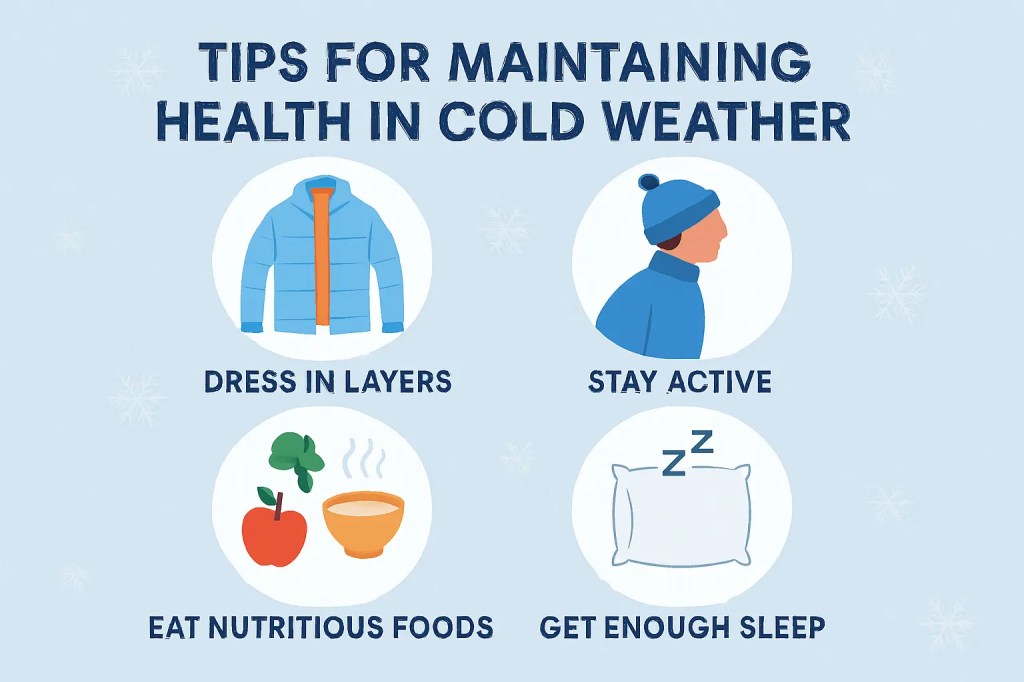
Maintaining health in cold weather
Cold conditions impose significant physiological, behavioral, and environmental demands that can degrade health if not managed proactively and with foresight. The harsh realities of frigid temperatures affect the body’s ability to regulate its core temperature, leading to increased energy expenditure and a greater susceptibility to illnesses.
The following guidance integrates best practices for thermoregulation, ensuring that appropriate clothing layers are used to trap warmth while allowing moisture to escape; nutrition, emphasizing the consumption of high-energy foods that can sustain body heat; hydration, highlighting the importance of maintaining fluid intake even when cold weather diminishes the sensation of thirst; physical activity, encouraging regular exercise to generate body heat and enhance overall fitness; infection prevention, stressing the need for proper hygiene and awareness of common cold-weather ailments; skin care, advising on the use of moisturizers to combat skin dryness and prevent damage; sleep, focusing on the necessity of quality rest to support immune function; and mental wellbeing, advocating for social connections and mental health practices to combat the isolation that can accompany cold climates. It is intended for general health maintenance, rather than acute survival scenarios, aiming to equip individuals with the knowledge and tools to thrive even in the most challenging winter conditions.
Thermoregulation and clothing systems
Effective thermoregulation reduces cardiovascular strain, preserves dexterity, and minimizes cold injuries.
- Layered clothing system:
- Base layer: Moisture-wicking synthetic or merino wool to move sweat away from skin and reduce evaporative heat loss.
- Insulation layer: Fleece, wool, or lofted synthetic/down to trap warm air; choose synthetic insulation in wet climates.
- Outer shell: Windproof and water-resistant to limit convection and moisture ingress; prioritize adjustable ventilation (pit zips, front zipper) to prevent overheating and sweating.
- Extremity protection:
- Head/neck: Insulated hat, balaclava, and neck gaiter to reduce heat loss and protect airway from cold, dry air.
- Hands/feet: Mittens with liners retain more heat than gloves; insulated, roomy boots with wool/synthetic socks reduce frostbite risk. Carry spare socks/glove liners to maintain dryness.
- Moisture management:
- Activity pacing: Modulate exertion and open vents before high-intensity efforts to avoid sweat accumulation.
- Drying protocol: Replace damp layers promptly; air-dry items during breaks and overnight when feasible.
- Fit and compression:
- Air gap: Maintain slight loft; overly tight garments compress insulation and reduce effectiveness.
- Mobility: Ensure full joint range to preserve circulation and reduce overuse injuries in stiff conditions.
Nutrition and hydration strategies
Cold environments increase energy expenditure while blunting thirst. Targeted intake supports immunity, thermogenesis, and recovery.
- Caloric intake:
- Energy density: Favor nuts, seeds, cheese, eggs, whole grains, and dried fruit to meet higher metabolic demands.
- Meal frequency: Small, frequent feedings stabilize glucose, mood, and heat production without provoking sweat-inducing exertion post-meal.
- Macronutrient balance:
- Carbohydrates: Provide rapid fuel for shivering and activity; include complex sources for sustained energy.
- Protein: Supports muscle repair and immune function; distribute across meals for absorption.
- Fats: Enhance satiety and caloric density; prioritize unsaturated fats and omega‑3s (fish, flax, walnuts).
- Micronutrients:
- Vitamin D: Short daylight reduces cutaneous synthesis; obtain through fortified foods and dietary sources.
- Vitamin C and zinc: Support immune defenses; incorporate citrus, berries, legumes, and lean meats.
- Hydration discipline:
- Warm fluids: Herbal teas, broths, and warm water improve adherence and minimize thermal burden.
- Volume targets: Establish scheduled intake; insulate bottles and store upside down to minimize freezing at the cap.
- Safe sources: Melt snow or ice before consumption; avoid eating snow directly due to cooling and reduced total intake.
- Substances to limit:
- Alcohol: Increases peripheral vasodilation, impairs thermoregulation and sleep quality.
- Excess caffeine: Can exacerbate diuresis and sleep disruption; balance with adequate fluids.
Physical activity and musculoskeletal health
Cold temperatures increase stiffness, reduce tissue elasticity, and raise injury risk. Structured movement maintains cardiovascular health and joint function.
- Warm-up and cool-down:
- Dynamic warm-up: 10–15 minutes of gradual, rhythmic movement to increase tissue temperature and joint lubrication.
- Post-activity cool-down: Light movement and gentle stretches to reduce stiffness and support recovery.
- Exercise selection:
- Moderate intensity: Brisk walking, cycling on trainers, swimming in heated pools, resistance training; avoid prolonged maximal efforts that provoke sweating in cold.
- Balance and coordination: Integrate proprioceptive drills to reduce fall risk on ice (e.g., single-leg stance, slow controlled movements).
- Load management:
- Pacing: Maintain conversational intensity outdoors; schedule micro‑breaks to vent layers and hydrate.
- Surface caution: Use traction aids on icy terrain; prefer sheltered routes to reduce wind exposure.
- Recovery:
- Protein timing: 20–30 minutes post-exercise supports repair.
- Sleep prioritization: See sleep section for quality strategies under cold conditions.
Respiratory and infection control
Winter increases respiratory infection incidence and airway irritation from cold, dry air. Preventive habits reduce illness burden.
- Airway protection:
- Face covering: Scarves or masks warm and humidify inspired air, reducing bronchospasm and throat irritation.
- Nasal hygiene: Saline sprays maintain mucosal moisture and barrier function.
- Hand and surface hygiene:
- Handwashing: Regular soap-and-water or alcohol-based sanitizer, especially after public transit and before meals.
- Touch discipline: Minimize face touching; clean high-contact surfaces (phones, doorknobs).
- Crowding and ventilation:
- Indoor air quality: Balance warmth with ventilation; use HEPA filtration where feasible.
- Spacing: Reduce time in dense, poorly ventilated indoor settings during peak illness waves.
- Vaccination and preventive care:
- Seasonal vaccines: Follow local health guidance for influenza and other recommended vaccines.
- Chronic conditions: Optimize control (e.g., asthma action plans) before cold season.
Skin, foot care, and peripheral circulation
Cold and low humidity impair skin barrier function and circulation, increasing risk of dermatitis and cold injuries.
- Skin care:
- Emollients: Apply fragrance-free, ceramide-rich moisturizers after bathing and before exposure; use occlusive balms on lips and exposed areas.
- Bathing practices: Short, lukewarm showers; avoid harsh soaps that strip oils.
- Sun protection: UV exposure persists in winter, amplified by snow reflection; use broad-spectrum sunscreen on exposed skin.
- Foot care:
- Sock rotation: Change damp socks promptly; use wool/synthetic blends that maintain loft when moist.
- Fit and insulation: Ensure toe room to prevent compression and preserve circulation.
- Daily checks: Inspect for blisters, cracks, or color changes; address hot spots early.
- Circulation support:
- Active movement: Regular ankle pumps, finger flexion, and short walks counteract vasoconstriction.
- Compression caution: Avoid tight bands or clothing that impede blood flow to hands/feet.
Sleep, circadian rhythm, and mental wellbeing
Cold weather disrupts circadian cues and can worsen mood and sleep quality. Intentional routines sustain resilience.
- Sleep environment:
- Thermal neutrality: Maintain bedroom temperatures that avoid shivering or sweating; layer bedding for fine control.
- Pre-sleep warmth: Warm socks, light stretching, or a hot water bottle promote vasodilation and easier sleep onset.
- Light management:
- Daylight exposure: 30–60 minutes of morning outdoor light supports circadian alignment and mood.
- Evening routine: Dim lights and reduce screens before bed to preserve melatonin signaling.
- Mental health practices:
- Structured social contact: Regular check-ins with friends/family; avoid prolonged isolation.
- Activity planning: Maintain purposeful daily tasks; include enjoyable, low-friction activities.
- Stress reduction: Short mindfulness sessions, reading, or creative hobbies to buffer seasonal stress.
Home, commute, and occupational health
Practical environmental controls and routines reduce cold-related strain in daily life.
- Home environment:
- Draft control: Seal leaks; insulate windows and floors in primary living areas.
- Zoned heating: Concentrate activity in one warm room; use humidifiers to maintain comfortable humidity.
- Safety: Ensure carbon monoxide detectors are functional if using combustion appliances.
- Commute practices:
- Pre‑warming: Heat vehicle safely; clear exhaust pipe before engine use in snow.
- Redundancy: Carry spare gloves, socks, and an emergency layer; include water and nutrient-dense snacks.
- Work ergonomics:
- Warm-up breaks: Short movement intervals to maintain circulation in cold workplaces.
- Protective equipment: Thermal gloves and footwear that balance dexterity and warmth; anti-slip aids in icy conditions.
Decision cues and personal monitoring
Timely adjustments prevent small issues from escalating into health problems.
- Action triggers:
- Persistent shivering or cognitive slowing: Add insulation, reduce exposure, and consume warm fluids and calories.
- Damp clothing or cold extremities: Change layers and apply local warming measures; avoid rubbing frost-prone skin.
- Mood or sleep decline: Increase daylight exposure, regular activity, and social connection; reassess evening routines.
- Self-checks:
- Hydration: Monitor urine color and schedule fluid intake.
- Skin and feet: Daily inspection for dryness, cracks, or color changes.
- Energy and recovery: Track fatigue; adjust training load and nutrition accordingly.
🧩 Core Principles
- Stay Dry, Stay Warm: Moisture is the fastest way to lose heat. Always manage sweat and replace damp layers quickly.
- Fuel Your Body: Cold increases energy demands. Eat balanced, calorie-dense foods and hydrate regularly, even when you don’t feel thirsty.
- Protect Extremities: Hands, feet, ears, and nose are most vulnerable. Insulate them well and check frequently for signs of frostbite.
- Control Exposure: Limit time in severe cold, especially during wind chill. Use shelter breaks to reset body temperature.
- Monitor Health Signals: Persistent shivering, confusion, or numbness are red flags—act immediately to restore warmth and hydration.
🧭 Practical Daily Habits
- Layer Smartly: Adjust clothing before exertion to avoid sweating.
- Warm Fluids: Replace cold drinks with teas, broths, or warm water.
- Skin Care: Moisturize exposed areas and use sunscreen—UV reflection from snow is significant.
- Sleep & Recovery: Ensure adequate rest; fatigue reduces resilience against cold stress.
- Mental Wellbeing: Seek daylight exposure and maintain social contact to counter seasonal mood dips.


 Ignite and Achieve