
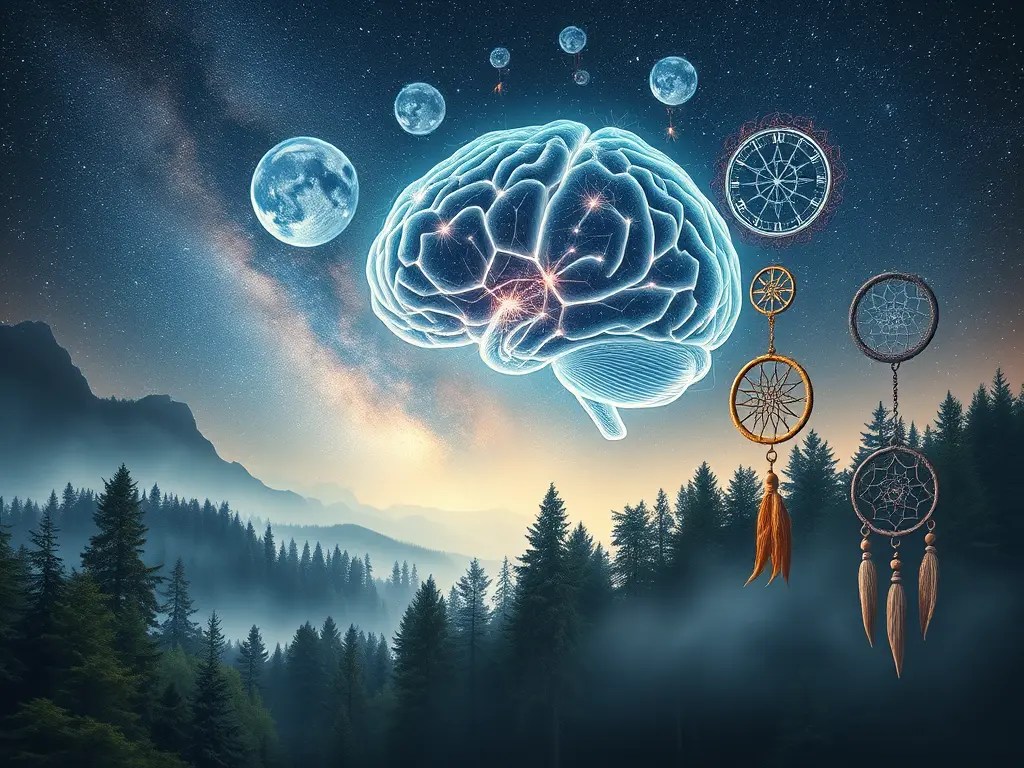
Dreams have captivated the human mind for centuries, serving as a mysterious gateway into our subconscious thoughts, emotions, and unresolved conflicts. The psychology of dreams offers fascinating insights into our mental and emotional landscapes, revealing how dreams function, their possible meanings, and their significance in psychological theories, neurological, and cultural aspect.
The Psychology of Dreams: An In-Depth Exploration
Dreams have captivated human curiosity for centuries, serving as a gateway to the subconscious mind, a realm where emotions, memories, fears, and desires intermingle in symbolic narratives. While the debate continues over their precise purpose, scientific research and psychological theories suggest that dreams play a crucial role in emotional processing, problem-solving, and cognitive development.
This article will explore dreams through multiple perspectives—neurology, psychoanalysis, cognitive psychology, mental health, cultural interpretations, and even the future of dream research. By the end, you’ll have a comprehensive understanding of the mysterious landscapes that unfold behind closed eyes.
Neurology: The Science of Dreams
How the Brain Creates Dreams
Dreams primarily occur during Rapid Eye Movement (REM) sleep, a phase in the sleep cycle where brain activity closely resembles wakefulness. The key neurological components involved in dreaming include:
- The Amygdala: The brain’s emotional processing center, responsible for the intensity of dream emotions, especially fear and anxiety.
- The Hippocampus: Facilitates memory consolidation, explaining why dreams often weave together past experiences in bizarre ways.
- The Prefrontal Cortex: Generally less active during REM sleep, which is why logic and critical thinking are reduced, allowing for surreal and illogical dream content.
- The Brainstem: Regulates sleep cycles and initiates REM sleep, influencing the frequency and duration of dreams.
Neural Activation: The Activation-Synthesis Theory
Neuroscientists Allan Hobson and Robert McCarley proposed the Activation-Synthesis Theory, suggesting that dreams result from random neural firings in the brain, which the mind attempts to organize into a coherent narrative. This theory challenges Freud’s belief in symbolic dream interpretation, arguing that dreams may not have inherent meaning but are instead the brain’s effort to make sense of chaotic subconscious signals.
Memory Consolidation and Learning
Research indicates that dreams play a crucial role in reinforcing learning and consolidating new memories. The Self-Organization Theory of Dreaming suggests that dreams serve as neural exercises that improve problem-solving and adaptation by allowing the brain to simulate possible future scenarios.
Psychoanalysis and Symbolism
Freudian Dream Analysis
Sigmund Freud, the founder of psychoanalysis, believed that dreams were the “royal road to the unconscious,” offering insights into repressed desires, anxieties, and unresolved conflicts. His theory distinguishes between:
- Manifest Content: The literal storyline of a dream.
- Latent Content: The hidden, subconscious meaning behind the dream.
For example, dreaming about being chased may symbolize avoidance of a difficult situation or suppressed fears.
Jungian Dream Theory: Archetypes and Symbols
Carl Jung expanded on Freud’s ideas, suggesting that dreams contain universal archetypes—symbols that connect us to the collective unconscious, a shared reservoir of human experiences across all cultures. Common archetypes include:
- The Shadow: Represents repressed aspects of oneself.
- The Anima/Animus: The feminine and masculine sides of the psyche.
- The Wise Old Man/Woman: Symbolizes wisdom and guidance.
- The Hero’s Journey: Reflects personal growth and transformation.
Dreams, according to Jung, are messages from the unconscious mind, guiding individuals toward self-discovery and psychological balance.
Cognitive Psychology and Problem-Solving
Dreams as Problem-Solving Tools
Psychologists such as Deirdre Barrett argue that dreams aid in problem-solving and creative thinking. Many historical breakthroughs have reportedly stemmed from dreams:
- Dmitri Mendeleev’s Periodic Table: Scientists say Mendeleev saw the arrangement of chemical elements in a dream.
- Elias Howe’s Sewing Machine: A dream inspired the mechanical needle design.
- Paul McCartney’s “Yesterday”: The melody for this famous song came to him in a dream.
Research suggests that dream incubation, a technique where individuals focus on a problem before sleep, can lead to solutions appearing in dreams.
Mental Health and Emotional Processing
Nightmares and Trauma
Nightmares can be linked to psychological distress, unresolved trauma, or anxiety disorders. People with PTSD (Post-Traumatic Stress Disorder) often experience recurrent nightmares that reflect traumatic events, making dream therapy an essential tool in treating emotional wounds.
Lucid Dreaming as Therapy
Lucid dreaming occurs when individuals become aware that they are dreaming, sometimes gaining control over dream events. Therapists use lucid dreaming techniques to help patients overcome fears, rehearse real-life scenarios, and heal emotional trauma.
Recurring Dreams: What Do They Mean?
Recurring dreams often indicate unresolved psychological themes. Some common recurring dreams include:
- Falling: Signifying feelings of helplessness.
- Being Chased: Representing avoidance of conflict.
- Teeth Falling Out: Linked to anxiety and insecurity.
- Lost or Forgotten Exams: Common among those struggling with performance pressure.
Cultural and Spiritual Interpretations
Ancient Civilizations and Dream Interpretation
- Egyptians: Believed dreams were divine messages; dream interpreters held high status.
- Greeks and Romans: Saw dreams as prophetic visions from gods.
- Chinese Philosophy: Dreams are reflections of Qi (life energy) and moral balance.
- Indigenous Tribes: Viewed dreams as spirit journeys or ancestral wisdom.
Modern Spiritual Views
Many spiritual traditions see dreams as ways to connect with higher consciousness, receive warnings, or explore past life experiences. In these traditions, dreams are often viewed as a gateway to the subconscious, allowing individuals to tap into deeper insights and universal knowledge. They serve as a medium through which messages from the divine can be conveyed, offering guidance and clarity in times of uncertainty. Additionally, dreaming can be a profound way to process emotions and experiences, helping individuals to heal from past traumas or unresolved issues. By delving into the rich tapestry of our dream life, we can discover hidden aspects of ourselves and gain a greater understanding of our spiritual journey.
The Future of Dream Research
Neuroscience and AI in Dream Studies
As technology advances, neuroscientists are developing ways to decode and record dream content using AI and brain imaging. Dream telepathy research investigates whether individuals can influence or share dreams, though conclusive evidence remains elusive.
Can We Fully Control Dreams?
With increasing interest in lucid dreaming and dream engineering, future techniques may allow humans to design dream experiences, enhancing creativity, reducing nightmares, and even using dreams as therapeutic interventions.
Conclusion
Dreams remain an enigmatic and deeply personal aspect of the human experience. While psychological theories offer explanations, they still leave room for mystery. Whether they serve as emotional processing, problem-solving mechanisms, spiritual journeys, or simple neural byproducts, dreams are one of the mind’s most fascinating phenomena. These nocturnal narratives can reflect our innermost fears and desires, often bringing forth insights we may not consciously acknowledge during our waking hours. As we traverse the dream landscape, we may encounter bizarre scenarios or meet figures who symbolize aspects of ourselves, prompting us to ponder their significance. The science behind dreams, exploring REM sleep and the brain’s activity during these episodes, continues to evolve, captivating researchers and enthusiasts alike. Ultimately, the complexity of dreams can enrich our lives, inviting us to explore the depths of our psyche and engage in a profound dialogue with our subconscious mind.
 Ignite and Achieve