
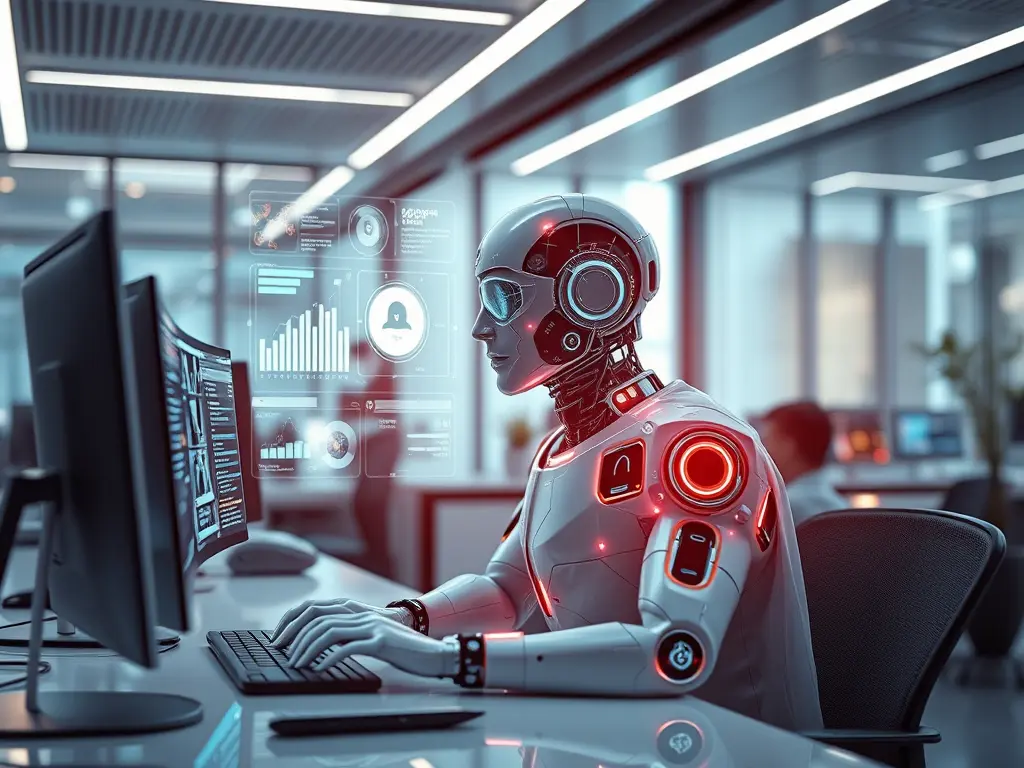
AI is entering a new era—one that’s less about chatbots answering questions and more about AI agents that can think, plan, and act autonomously. These advanced systems are being designed to understand complex tasks and make decisions without human intervention. By leveraging enormous amounts of data, they can analyze situations, anticipate future developments, and respond effectively to changing environments. This transformative shift not only enhances productivity but also redefines our expectations of what AI can achieve, opening up new possibilities in industries ranging from healthcare to finance and beyond.
The Shift from Assistants to Agents
Right now, most AI tools are reactive: you ask, they answer. But the next generation will be proactive, capable of handling multi-step tasks without constant human supervision and adapting to changing circumstances along the way. Imagine an AI-powered legal assistant that not only analyzes case law, drafts documents, and schedules meetings—all without needing a person to guide it through each step—but also learns from previous interactions to offer tailored solutions and recommendations. These AI agents will have the potential to understand the nuances of legal arguments, applying relevant precedents with precision, and even negotiating on behalf of their human counterparts. Moreover, they won’t just provide information; they’ll execute tasks in various fields such as business, healthcare, logistics, and beyond, seamlessly integrating into existing workflows to enhance efficiency and productivity. By taking on routine and complex responsibilities, they will allow professionals to focus on strategic decision-making and creative problem-solving, ultimately transforming how work is conducted in various industries.
AI’s New Role: Decision-Maker & Digital Employee
AI is moving beyond being a support tool—it’s becoming an independent problem solver. Companies like OpenAI and Google are already developing AI models that can take actions on their own, significantly enhancing efficiency and productivity across various sectors. In enterprise software, AI-driven digital employees will be able to handle operations like customer service, inventory management, and even HR processes, all while learning and adapting to user preferences and organizational needs. This not only streamlines workflows but also reduces the likelihood of human error, ensuring a higher level of accuracy and reliability in everyday tasks. Some futurists even predict the rise of personal AI assistants that manage your finances, schedule your day, and even negotiate contracts on your behalf, thus giving individuals more time to focus on strategic decision-making and personal pursuits. As these technologies evolve, they will likely introduce a new era of proactive engagement, where AI anticipates needs and challenges before they arise, fundamentally transforming our interaction with technology and reshaping the landscape of work and personal life alike.
AI Mode & Conversational Search
AI isn’t just transforming tasks—it’s reshaping how we find information in profound ways. Google’s AI Mode aims to revolutionize the search experience, making it more interactive and conversational, thereby competing directly with how AI assistants respond today. Instead of merely delivering simple lists of links, AI-powered search will now summarize information, provide contextual answers, and even recommend actions based on what users are looking for. This shift not only enhances user engagement but also promises to deliver a more tailored experience, allowing users to feel as though they are having a dialogue rather than just inputting queries. As technology advances, we can expect AI-driven search engines to incorporate even more sophisticated features, such as understanding nuances in language, recognizing user intent, and adapting to individual preferences over time, thus creating a highly personalized search environment that caters to the unique needs of every user.
The Future: AI in Hardware & Robotics
Right now, AI lives mostly in apps and websites, but companies like Tesla, Figure AI, and Agility Robotics are bringing AI into humanoid robots. Imagine robots that learn from their environment and adapt to human needs, capable of completing physical labor, assisting the elderly, or even working in factories. These advanced machines could be designed to understand complex tasks through extensive machine learning algorithms, allowing them to interact seamlessly with humans and other devices. While still in its early stages, AI-powered robotics could redefine industries, shifting the way humans interact with machines entirely. As these technologies evolve, we might witness a future where humanoid robots become integral companions in our daily lives, greatly enhancing productivity and offering companionship, thereby transforming the workplace and home environments alike. Innovations in AI could allow these robots to develop emotional intelligence, making them more relatable and effective in their roles, and opening new avenues in healthcare, education, and personal assistance.